
Home Health Partner for Coordinated Skilled Care in Michigan
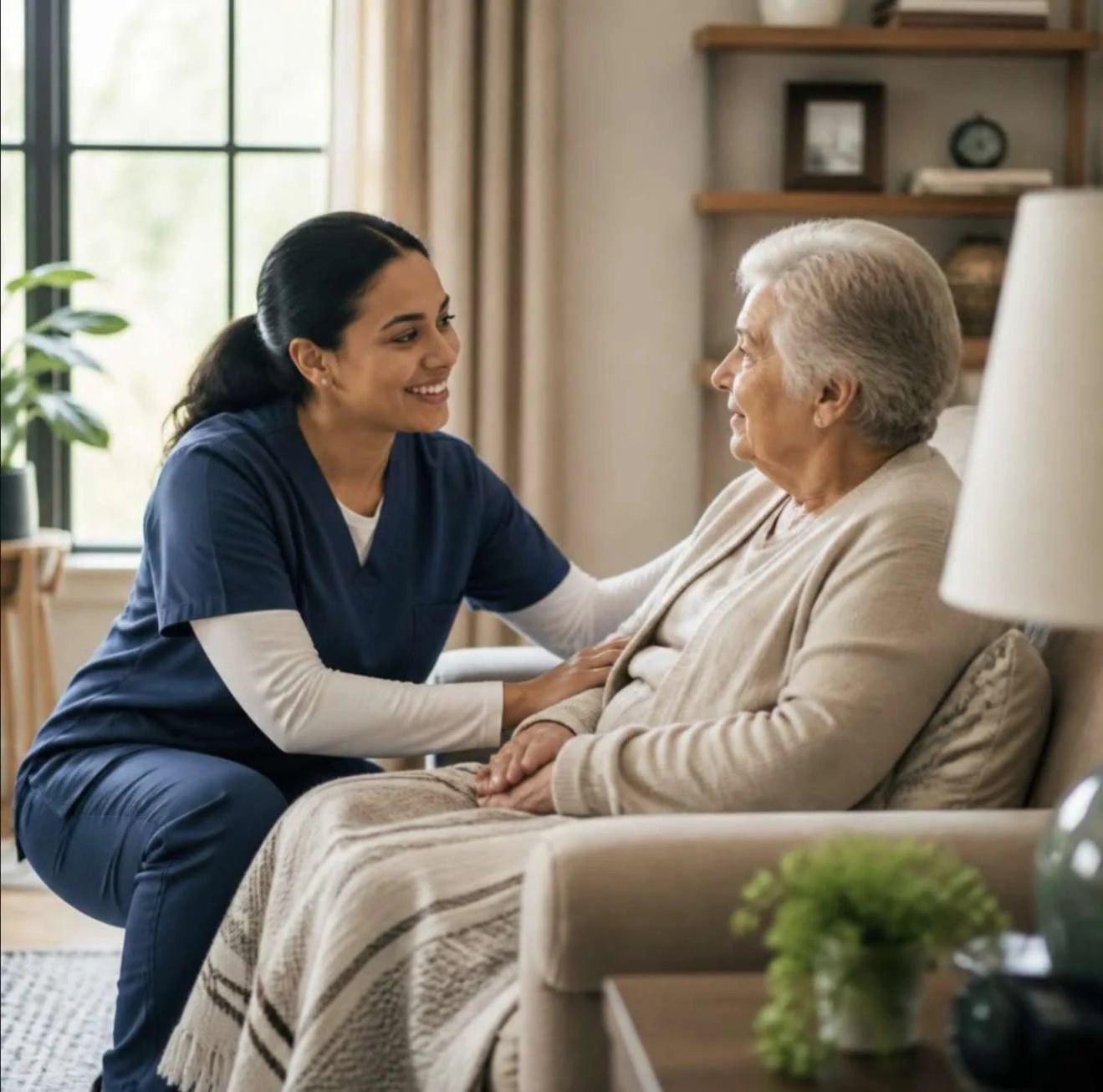
When a patient needs skilled care at home, the physician’s plan of care should not become fragmented across multiple services.
Patients managing chronic disease, recovering from surgery, dealing with mobility limitations, requiring wound care, or experiencing cardiopulmonary challenges may need more than one type of clinical support. For physicians and other eligible practitioners, finding dependable home health care in Michigan means finding a provider capable of coordinating those needs around an individualized plan of care.
All Americans Home Health & Hospice Care (AAHHCMI) offers a multidisciplinary approach to home-based care, bringing skilled nursing, rehabilitation, respiratory therapy, medical social work, and home health aide services together to support qualifying patients in their homes.
For physicians, NPs, PAs, and other eligible practitioners, the goal is straightforward: one home health partner capable of coordinating multiple skilled disciplines around the patient’s plan of care.
When Should a Physician Consider Home Health Care?
A patient does not necessarily need hospitalization or facility-based care to require skilled clinical services.
A physician or allowed practitioner may identify a need for home health when a patient's condition requires intermittent skilled nursing, therapy, or other qualifying services that can appropriately be delivered at home.
Common clinical situations may include chronic disease deterioration, wound care needs, post-surgical recovery, medication management, mobility limitations, cardiopulmonary conditions, and rehabilitation needs.
For Medicare home health coverage, CMS states that a patient must meet applicable eligibility requirements, including being under the care of a physician or allowed practitioner, receiving services under an established and periodically reviewed plan of care, and meeting homebound and skilled-service requirements.
This makes the physician or allowed practitioner's role central to both clinical decision-making and appropriate documentation.
Home Health Care Michigan Physicians Can Coordinate Around the Patient
Patients with complex conditions rarely have just one need.
Consider a patient returning home after surgery. Skilled nursing may be needed to monitor the patient's condition and provide ordered clinical care, while physical therapy may address mobility and strength. Occupational therapy may help the patient regain functional independence, while a home health aide may provide appropriate personal-care assistance under the plan of care.
A patient with a cardiopulmonary condition may require a different combination of services, potentially involving nursing, rehabilitation, and respiratory support.
This is where a multidisciplinary home health care Michigan provider can be particularly valuable.
Rather than viewing each discipline in isolation, coordinated home health care allows multiple professionals to contribute to the patient's individualized care plan.
CMS guidance similarly requires home health agencies to integrate orders from relevant physicians or allowed practitioners and coordinate services across disciplines, including communication about patient concerns and progress toward established goals.
Skilled Nursing Care at Home in Michigan
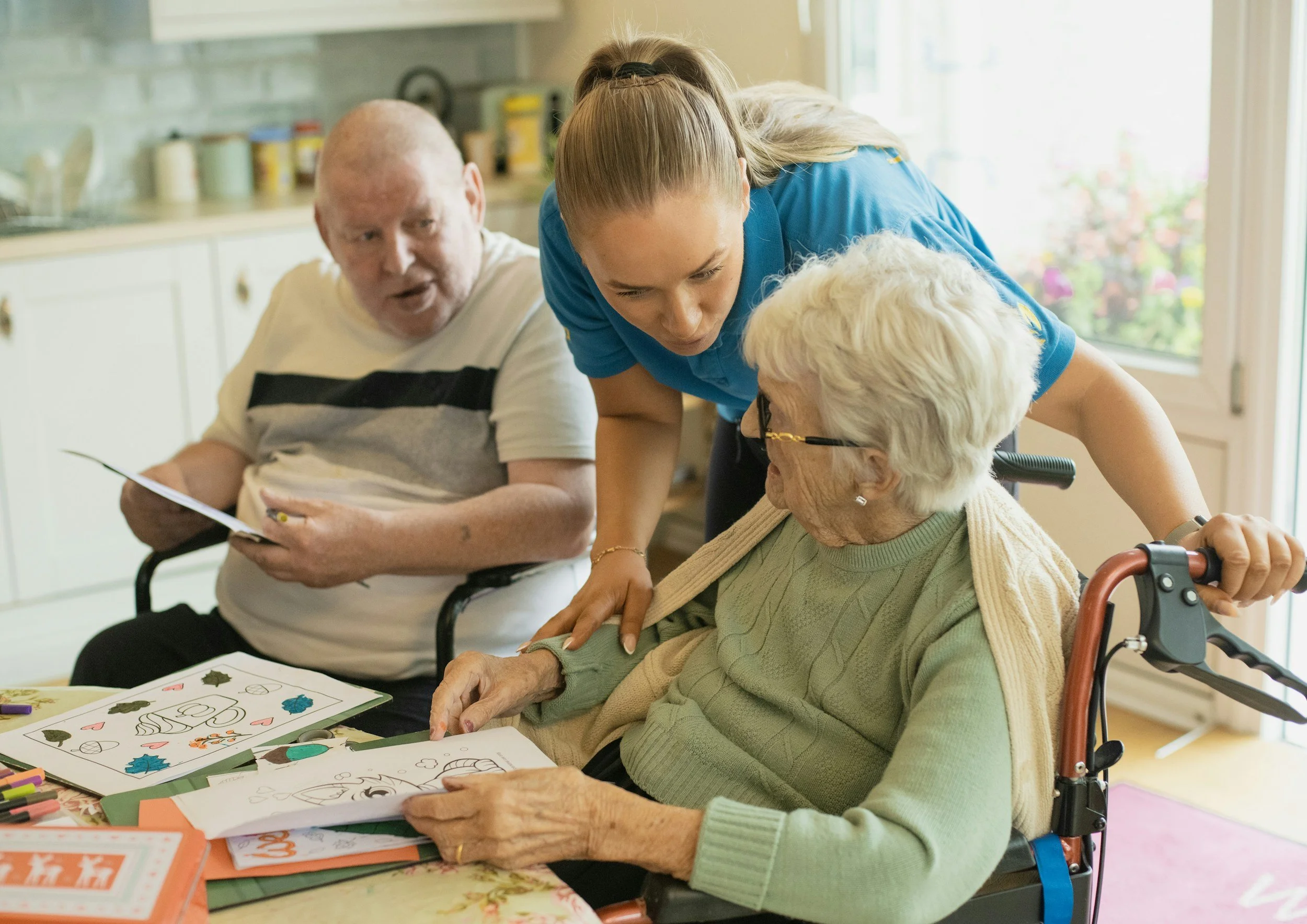
For many physician referrals, skilled nursing is at the center of the home health plan.
Skilled nursing care at home in Michigan may be appropriate when a qualifying patient's medical condition requires intermittent professional nursing services that can safely and effectively be delivered in the home.
Depending on the patient's diagnosis, orders, and individualized plan of care, skilled services may address needs associated with disease management, wound care, medication management, clinical monitoring, or recovery following hospitalization or surgery.
Importantly, Medicare eligibility is not based simply on a diagnosis.
CMS requires documentation supporting the patient's need for skilled services and homebound status. The patient's medical record must contain information that justifies the home health referral, and the plan of care must be established and periodically reviewed as required.
For referring practitioners, clear and complete documentation helps connect the clinical reason for the referral with the services being ordered.
A Multidisciplinary Approach to Home Health
One of AAHHCMI's strengths for physician referral relationships is the range of disciplines available through its home health model.
Depending on the patient's assessed needs, eligibility, and orders, services may involve skilled nursing, physical therapy (PT), occupational therapy (OT), speech therapy, respiratory therapy, medical social work, and home health aides.
That multidisciplinary structure matters when a patient has overlapping needs.
A patient with declining mobility and a chronic respiratory condition, for example, may require a very different plan than someone recovering from orthopedic surgery. The objective is not to fit every patient into the same service model. It is to coordinate the appropriate disciplines around the patient's individual clinical needs and established plan of care.
Home Health Care in Flint, MI
For physicians and medical practices serving Flint and surrounding communities, choosing home health care in Flint, MI also requires considering whether the agency's geographic coverage and clinical capabilities align with the patient's needs.
A referral relationship becomes more useful when the medical practice knows where to direct appropriate patients and understands what services the agency can evaluate and potentially provide.
For physicians searching for a home health agency in Flint, MI, clinical capability is only part of the equation. Communication, documentation, coordination of orders, and adherence to the plan of care are also important parts of an effective physician–home health relationship.
CMS regulations require home health services and treatments to conform to physician or allowed-practitioner orders, while the individualized plan of care must be reviewed and revised as required.
What Documentation Matters for a Home Health Referral?
Documentation is not simply an administrative detail. For Medicare patients, it is an important part of demonstrating eligibility for the home health benefit.
CMS states that the certifying physician's or allowed practitioner's medical record—and, when applicable, records from an acute or post-acute facility—must support the patient's need for skilled services and homebound status. CMS also establishes requirements surrounding the qualifying face-to-face encounter and plan of care.
The exact documentation needed will depend on the patient's circumstances and payer requirements, but the clinical record should clearly support why skilled home health care is medically necessary for that particular patient.
CMS also permits certain allowed practitioners—including nurse practitioners, clinical nurse specialists, and physician assistants—to certify and order Medicare home health services, subject to applicable requirements.
Searching for Home Health Care Near Me for a Patient
A search for home health care near me may produce many options, but proximity alone does not establish whether an agency is appropriate for a clinical referral.
Physicians and practice staff need to consider whether an agency serves the patient's location, offers the required disciplines, can evaluate the patient's clinical needs, and can work with the practitioner to implement the ordered plan of care.
For a patient requiring several disciplines, choosing a multidisciplinary agency may also simplify communication compared with coordinating unrelated providers for each individual service.
The aim is a more connected approach in which the home health team and referring practitioner remain aligned around the patient's clinical needs and care plan.
When In-Home Hospice Care in Michigan May Be Considered
Some patients face advanced or life-limiting illnesses for which the goals of care may shift.
In these circumstances, physicians may also be involved in conversations about in-home hospice care in Michigan or hospice care at home in Michigan, when clinically appropriate and consistent with the patient's wishes and applicable eligibility requirements.
Home health and hospice serve different purposes and have different eligibility requirements. The appropriate path depends on the individual patient's medical circumstances, goals, preferences, and applicable coverage criteria.
Clear communication among the practitioner, patient, family, and care provider can help ensure that patients understand the options available to them.
From Physician Referral to Coordinated Home Health Care
For a busy medical practice, the referral process should create a clear pathway from the physician's clinical decision to the patient's home-based care.
For appropriate referrals to AAHHCMI, that pathway can be viewed simply as:
Physician Referral → Documentation & Orders → Clinical Intake → Coordinated Home Health Care
The purpose is not merely to place a patient with a home health agency. It is to establish a care relationship in which the appropriate disciplines can work around the practitioner's orders and the patient's individualized needs.
Refer Your Patient to AAHHCMI
Have a patient who may need skilled care at home?
Connect with All Americans Home Health & Hospice Care to begin the referral process. Whether your patient requires skilled nursing, rehabilitation, respiratory therapy, or a combination of home-based services, AAHHCMI can evaluate the referral, applicable eligibility requirements, service needs, and available care options.
Make the next step in your patient's care a coordinated one.
Refer a Patient Today → Submit the physician referral and supporting documentation to AAHHCMI to begin clinical intake and home health care coordination.
