

Growing older should not mean growing disconnected from the people, places, and experiences that make life meaningful.
On the refrigerator hangs a calendar filled with doctor's appointments, prescription reminders, and upcoming medical tests.
But look a little closer.
When was the last time something was written there simply because it would be enjoyable?
A lunch with a friend. A birthday celebration. An afternoon exploring a bookstore. A visit from someone who isn't there to check blood pressure or organize medications.
For many older adults, life gradually becomes organized around healthcare rather than happiness.
Their physical needs may be receiving attention, while their emotional needs quietly go unnoticed.
For families across Washtenaw County, Michigan, from Ann Arbor and Ypsilanti to Saline, Dexter, and Chelsea, protecting an aging parent's quality of life requires looking beyond illness, mobility, and medical appointments.
It means protecting their sense of identity, belonging, and purpose.
When Life Becomes a Series of Things Your Parent Can No Longer Do
Imagine spending decades building a life around work, friendships, family responsibilities, and independence.
Then, little by little, familiar parts of that life begin to disappear.
The workplace where you spent thirty years is no longer part of your routine. The friends you once called every weekend are becoming fewer. Driving across town is no longer safe. Even a simple trip to the grocery store requires someone else's availability.
These changes can leave older adults wondering where they fit in.
For adult children, the immediate instinct may be to solve practical problems. Arrange transportation. Schedule appointments. Hire assistance.
But emotional losses cannot always be solved through logistical arrangements alone.
Sometimes, your parent needs someone to acknowledge how difficult these transitions are.
A simple conversation might begin with:
“I know things have changed quite a bit. What do you miss most about how your days used to be?”
The answer may reveal emotional needs that no medical checklist could identify.
Senior Isolation: When Being Home No Longer Feels Like Belonging
Living independently is something many older adults value deeply.
However, independence and isolation can sometimes exist under the same roof.
A parent might have a comfortable home, access to groceries, and regular telephone calls from family members, yet still feel disconnected from the community.
Social isolation refers to limited interpersonal contact, while loneliness describes the emotional experience of feeling disconnected. An older adult can experience either or both.
The National Institute on Aging's guidance on loneliness and social isolation identifies associations between social disconnection and several health concerns, including cardiovascular disease, depression, and cognitive decline.
Why Emotional and Physical Health Are Connected
Social disconnection may influence everyday health habits, creating challenges that extend beyond emotional well-being.
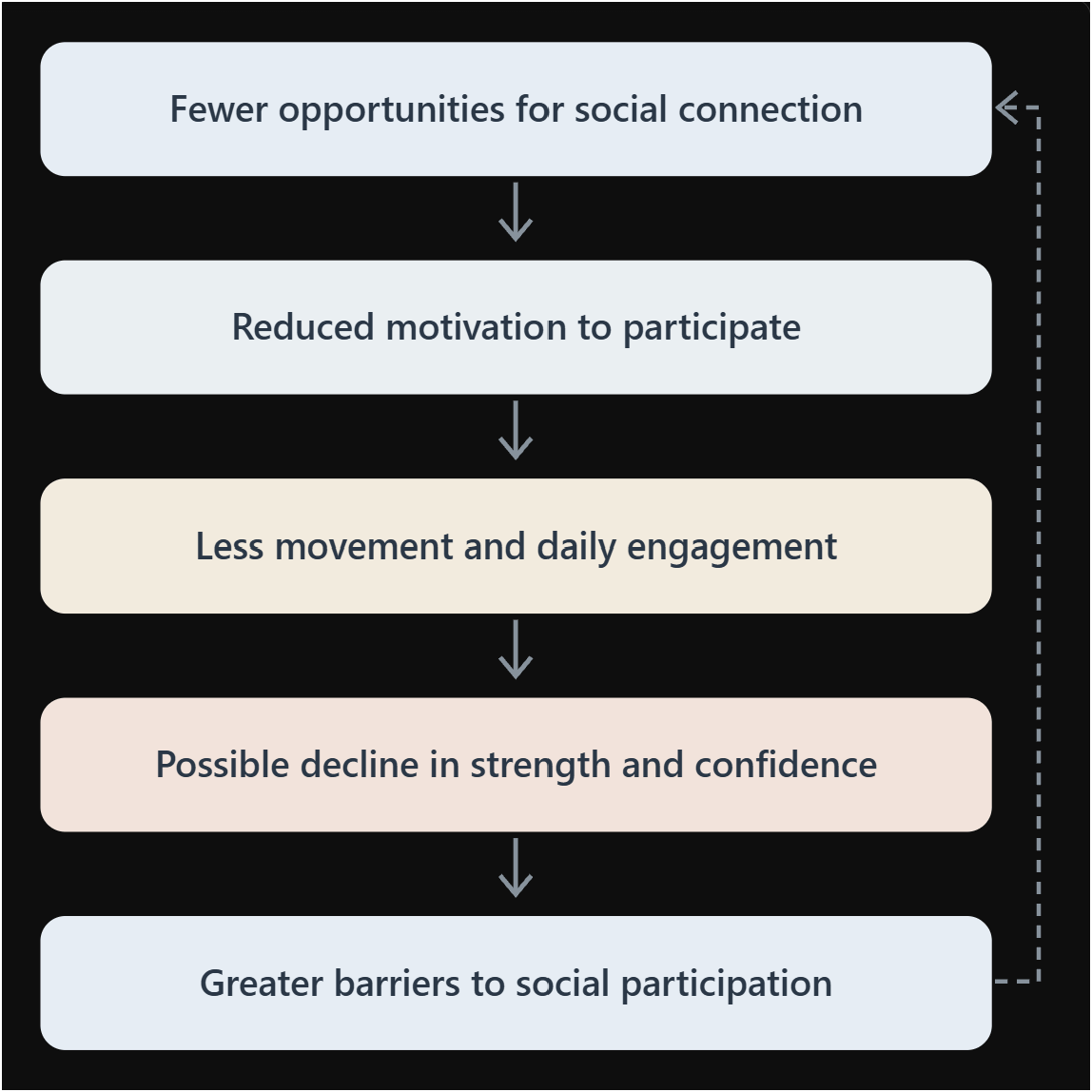
A possible cycle of senior social isolation. Individual experiences vary, and appropriate interventions may help interrupt this pattern.
Families can help by understanding what prevents their loved one from participating in activities rather than assuming they simply prefer staying home.
Hearing loss, chronic pain, mobility limitations, fatigue, or difficulty accessing transportation may all create barriers to meaningful social interaction.
When a Lifetime of Friendships Slowly Disappears
There is a particular kind of grief that comes with outliving longtime friends.
These aren't simply people your parent enjoyed spending time with.
They are people who remember their first job, their wedding day, their children's childhoods, and the neighborhood as it looked forty years ago.
Losing these friendships can feel like losing pieces of personal history.
Older adults may also experience grief repeatedly as more members of their social circle pass away.
Help Your Parent Preserve Their Personal History
Instead of always encouraging your parent to meet new people, make room for remembering the people they have lost.
Consider creating a memory project together.
Ask your parent to identify photographs, record stories from their younger years, describe family traditions, or write down memories they want future generations to know.
A grandchild might interview their grandparent about growing up in Michigan. A family member might help organize old letters or photographs into a keepsake album.
These activities allow your parent to honor important relationships while continuing to contribute something meaningful to the family.
Remember that new friendships do not replace old ones. They create additional opportunities for connection while leaving room for remembrance.
If grief becomes overwhelming or substantially interferes with daily functioning, professional bereavement support or counseling may be appropriate.
Beyond the Driver's Seat: Preserving Independence Without a Car
For someone who has driven independently for decades, giving up driving can feel like losing control over their own life.
Across Washtenaw County, a car may have represented access to familiar shops, community gatherings, medical appointments, places of worship, and friendships.
Suddenly, even a short outing may require advance planning.
Your parent might avoid requesting rides because they don't want to inconvenience anyone.
Over time, they may stop going out altogether.
Create a Mobility Plan That Protects Personal Choice
Rather than organizing transportation exclusively around essential errands, include activities your parent finds enjoyable.
| What driving once provided | How families can preserve that experience |
|---|---|
| Freedom to visit friends | Arrange recurring social outings |
| Control over daily errands | Let your parent choose destinations and shopping times |
| Spontaneous adventures | Leave flexible time for recreational trips |
| Participation in community events | Explore accessible local transportation options |
| Privacy and independence | Provide transportation support without taking over every decision |
Families can explore senior transportation resources and accessible transit options in their part of Washtenaw County.
If driving cessation is medically necessary, support the decision while acknowledging the emotional adjustment involved.
The objective is not simply to replace transportation. It is to restore access to a life your parent enjoys.
Build a Day Around Three Things: Choice, Connection, and Contribution
Supporting senior emotional health doesn't necessarily require complicated schedules.
A simpler approach is to create opportunities for three meaningful experiences throughout the day.

Choice: Give Your Parent a Voice in Everyday Decisions
As caregiving responsibilities increase, families may unintentionally begin making decisions on behalf of their loved ones.
What to eat. When to bathe. Which clothes to wear. How to spend the afternoon.
Whenever possible, involve your parent in decisions that affect their daily life.
Even choosing between two activities or deciding what to prepare for dinner can reinforce a sense of autonomy.
Connection: Prioritize Relationships That Matter
Not every social activity will feel meaningful to every older adult.
A quiet conversation with a trusted friend may be more enjoyable than attending a crowded gathering.
Ask your parent which relationships they would like to maintain or rekindle. Make those connections easier through accessible communication tools, visits, or transportation.
Contribution: Remind Your Parent That Their Experience Still Matters
Receiving care should not mean losing opportunities to contribute.
Your parent might enjoy helping plan a family celebration, teaching a grandchild a traditional recipe, offering advice about a household project, or writing birthday cards for relatives.
Giving someone a genuine role within the family can support feelings of usefulness and belonging.
Small Daily Habits That Support Emotional Wellness

Meaningful routines can help create structure without making your parent's day feel overly scheduled.
Here are seven practical habits families can introduce gradually.
Begin the day with daylight and a favorite activity
Open the curtains, enjoy breakfast near a window, or listen to a favorite morning program.
Learn something interesting
Explore audiobooks, documentaries, puzzles, or an accessible online class that reflects your parent's interests.
Reach out to someone first
Encourage your parent to send a message, write a letter, or call a friend rather than always waiting to receive a call.
Make movement enjoyable
Introduce clinician-approved physical activities, gentle stretching, or accompanied walks according to their abilities.
Create something
Painting, knitting, organizing photographs, or completing a small craft project may provide a satisfying sense of accomplishment.
Protect time for simple pleasures
A favorite dessert, a relaxing afternoon conversation, or listening to familiar music can make ordinary days more enjoyable.
Keep a small collection of good moments
Encourage your parent to record enjoyable experiences in a journal, scrapbook, or voice recording without pressuring them to feel positive every day.
These activities are not treatments for depression or other mental health conditions. They are practical opportunities to encourage enjoyment, participation, and personal fulfillment.
Is It Loneliness, Grief, or Something That Needs Medical Attention?
An aging parent may experience temporary sadness after a significant life change.
However, persistent changes in behavior, motivation, or daily functioning deserve attention.
According to the National Institute on Aging's resource on depression in older adults, depression may present differently in later life. Some older adults experience emotional numbness or diminished interest rather than obvious sadness.
Emotional Changes Families Should Pay Attention To
| What you notice | Why it deserves attention |
|---|---|
| Withdrawal from people they previously enjoyed | May indicate emotional distress or communication barriers |
| Persistent changes in sleep | May be associated with emotional or physical health concerns |
| Loss of appetite or unexplained weight changes | May reflect underlying medical or emotional problems |
| Abandoning favorite hobbies | Could indicate reduced motivation or loss of interest |
| Expressing feelings of hopelessness | Warrants compassionate attention and professional evaluation |
| Neglecting personal care | May suggest declining daily functioning |
| Increasing irritability or emotional numbness | Can occur with depression or other health conditions |
These signs do not automatically mean your parent has depression.
However, when changes persist or interfere with everyday life, speak with their healthcare provider.
If your loved one expresses suicidal thoughts, take them seriously. In the United States, call or text 988 for crisis support, or call 911 if there is immediate danger.
The Family Connection Plan: Making Support Sustainable
Adult children often feel responsible for filling every emotional gap in their parent's life.
But one person cannot realistically replace an entire social network.
A more sustainable approach is to develop a shared support system that respects the older adult's preferences.
Sample Weekly Emotional Wellness Plan
| Day | Meaningful activity | Person involved |
|---|---|---|
| Monday | Choose a recipe and plan a family meal | Adult child |
| Tuesday | Reconnect with a longtime friend | Friend or former neighbor |
| Wednesday | Enjoy an accessible community activity | Relative or companion |
| Thursday | Record a childhood memory | Grandchild |
| Friday | Complete a favorite hobby or small project | Independent or assisted |
| Saturday | Enjoy a relaxed recreational outing | Family member |
| Sunday | Share a meal, attend a faith gathering, or reflect | Family or community |
The schedule should remain flexible. Your parent should have the freedom to decline an activity, rest, or choose something different.
Successful emotional support is measured by meaningful participation, not by how many activities appear on a calendar.
How Professional Home Health Care Can Help Protect Independence
Sometimes, emotional withdrawal begins with a physical challenge.
An older adult may stop inviting friends over because getting dressed has become exhausting. They might avoid community gatherings because they're afraid of falling. A chronic illness may reduce the energy they once had for social activities.
Addressing these challenges can help create opportunities for greater participation.
At All Americans Home Health & Hospice Care, personalized clinical services are designed to address individual health and functional needs while respecting patients' dignity and personal preferences.
The Role of Multidisciplinary Home Health Support
| Home health service | How it may support independence and emotional well-being |
|---|---|
| Skilled Nursing | Assesses medical concerns that may contribute to fatigue, discomfort, or changes in behavior. |
| Physical Therapy | Addresses mobility and balance limitations that may restrict social participation. |
| Occupational Therapy | Helps patients adapt daily activities and meaningful hobbies to changing abilities. |
| Speech Therapy | Addresses communication difficulties that may interfere with conversations and relationships. |
| Medical Social Work | Helps patients and families navigate psychosocial concerns and access appropriate resources. |
| Home Health Aide Services | Assists with authorized personal care needs under an eligible patient's plan of care. |
Learn more about personalized home health care services offered by All Americans Home Health & Hospice Care.
Professional home health services are based on clinical needs, eligibility, provider orders, and service availability. Social isolation alone does not establish eligibility for skilled home health care.
Frequently Asked Questions
How can I help my elderly parent feel less isolated at home?
Begin by identifying barriers to social interaction. These may include transportation problems, hearing difficulties, mobility limitations, or grief. Introduce meaningful activities and regular social opportunities that reflect your parent's personal interests.
How can seniors cope emotionally after they stop driving?
Acknowledge the loss of independence and develop transportation alternatives that include recreational activities, not just medical appointments. Continue involving your parent in decisions about where and when they go.
What can I do when my aging parent loses several close friends?
Allow space for grief, encourage remembrance, and maintain regular contact. Help your parent explore new social opportunities when they are ready. Professional bereavement counseling may also be beneficial.
What gives elderly parents a sense of purpose?
Meaningful responsibilities, creative activities, family involvement, lifelong learning, volunteering, and opportunities to share knowledge may help older adults maintain a sense of identity and contribution.
Can home health care address emotional and social needs?
Eligible patients may receive services that address health-related barriers to independence. Medical social workers may also assist with psychosocial needs and community resource coordination. Skilled home health care does not replace professional mental health treatment or ongoing companionship.
Is home health care available in Washtenaw County, Michigan?
Availability depends on the provider's service territory, staffing, patient eligibility, and clinical needs. Families can contact All Americans Home Health & Hospice Care directly to inquire about coverage at their loved one's address.
Your Parent's Next Chapter Should Still Belong to Them
The greatest gift you can offer an aging parent may not always be another appointment, another safety device, or another carefully organized medication schedule.
Sometimes, it's the opportunity to make a decision.
To share a story someone genuinely wants to hear.
To visit a familiar place.
To teach something they know.
To wake up knowing that the day holds more than another series of medical responsibilities.
Your parent's abilities may change, but their need for meaningful relationships, personal identity, and emotional connection remains.
Caring for the whole person means protecting those parts of life, too.
Aging should change how someone participates in life—not whether they get to participate at all.
Because Your Loved One Deserves More Than Physical Care.
Is your aging parent becoming increasingly withdrawn, struggling with everyday independence, or experiencing health challenges that prevent them from enjoying the life they once knew?
At All Americans Home Health & Hospice Care, we recognize the importance of supporting the whole person through compassionate, individualized clinical care.
From skilled nursing and rehabilitation therapies to medical social work, our team can help families explore appropriate services that support dignity, comfort, and independence.
If your family lives in Washtenaw County or surrounding Michigan communities, contact us to discuss your loved one's needs and confirm service availability in your area.
The next chapter of your parent's life deserves meaningful moments, compassionate support, and opportunities to thrive. Start the conversation today.